The Patent
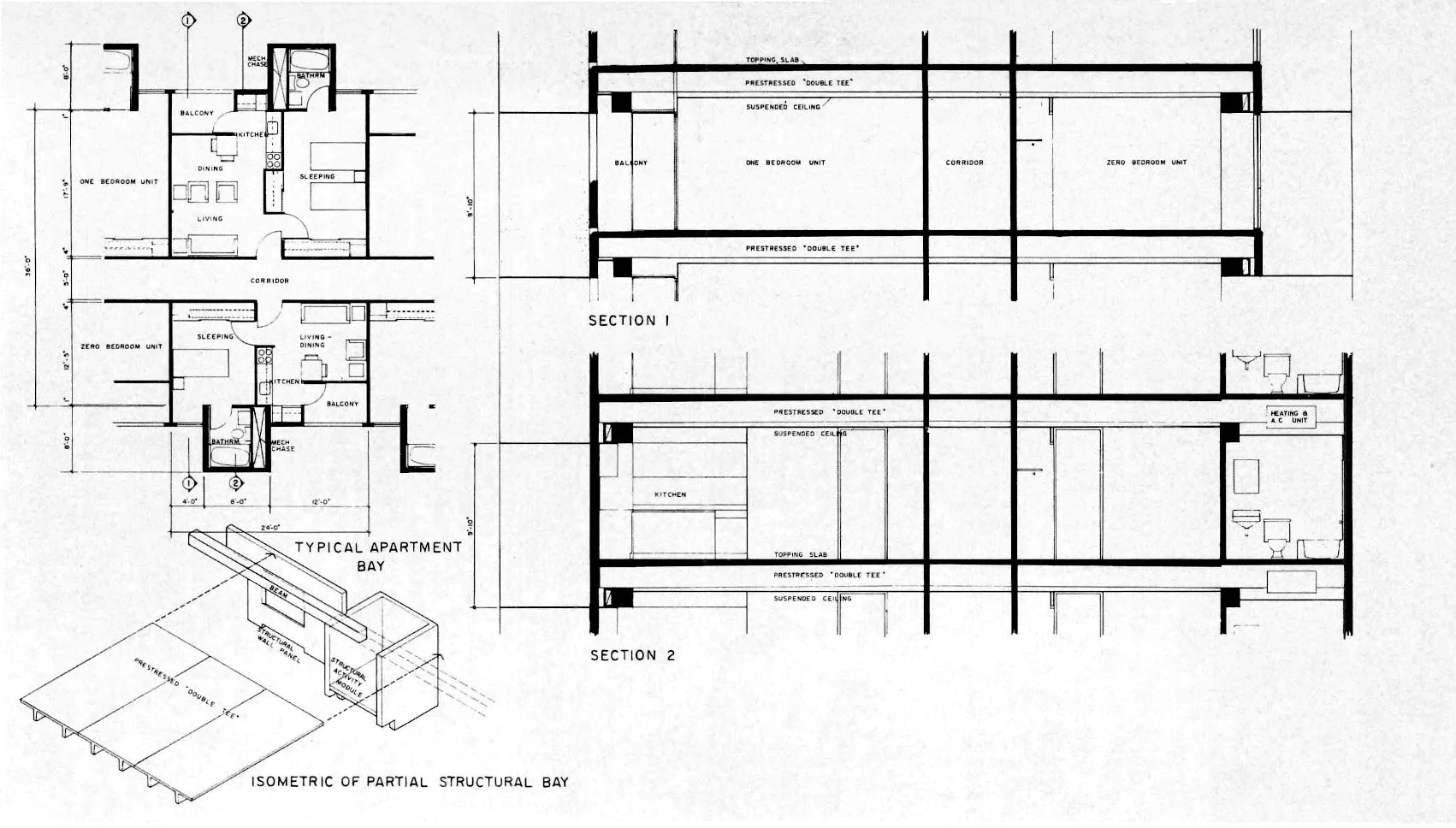
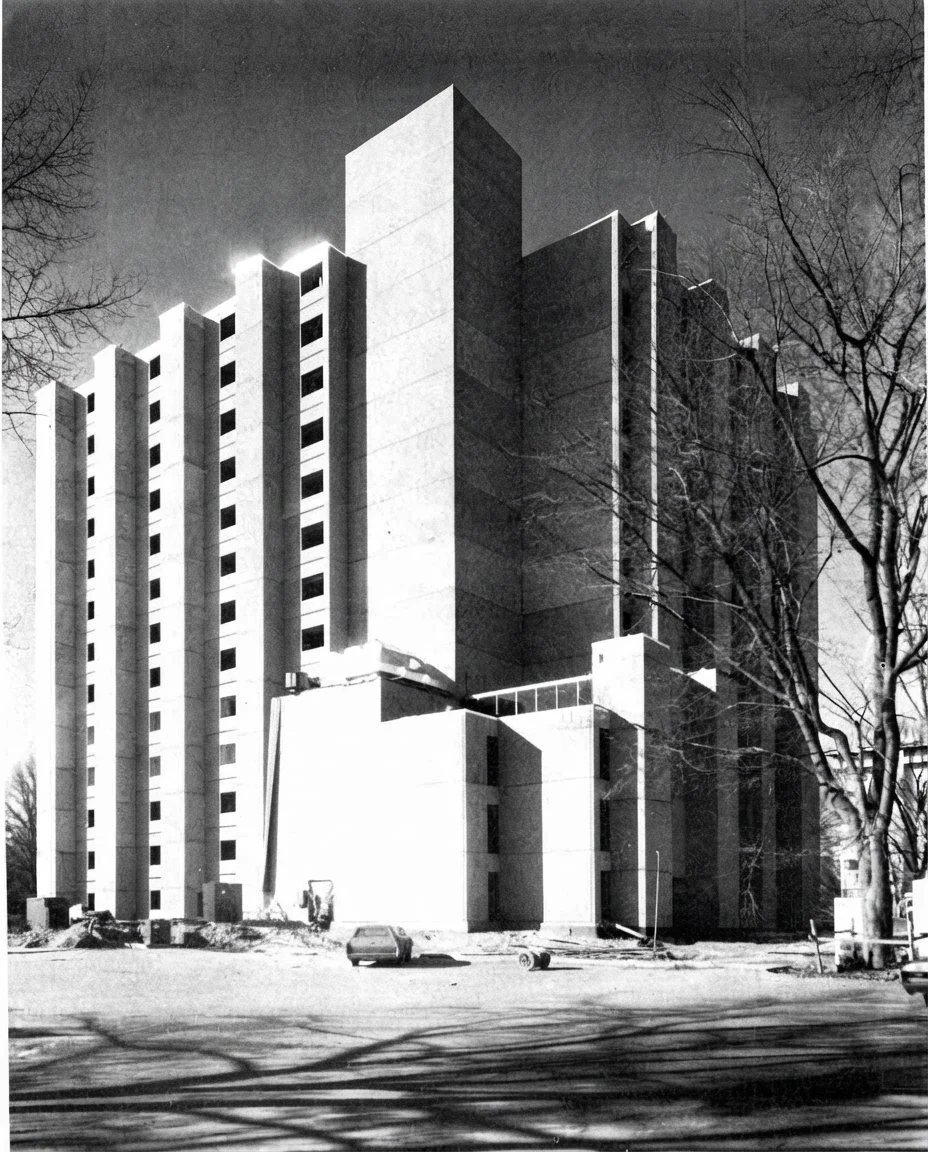
In 1971, Francis Mah and structural engineer William LeMessurier developed a precast concrete module system — a way of building high-rises from standardized components that could be fabricated by conventional manufacturers, without a proprietary plant.
Architectural Record described it as "a combination panel and 'box' system in concrete" that "can be fabricated by almost any precast concrete firm presently working, without need of any special forming machinery or techniques."
The system was first used at Luther Towers in Memphis, completed in 1971. A letter to Architectural Forum described it as "the first systems-built highrise in the U.S."
Mah, LeMessurier, and Walk C. Jones III were co-inventors on U.S. Patent 3,882,649, "Interlocked Modular Building System," filed in 1971 and issued in 1975.
How the System Worked
The Mah-LeMessurier System consisted of four basic components:
A service module — a U-shaped concrete channel containing bathroom fixtures and vertical plumbing chases, which also served as the principal structural support for the building
Beams — standard design and dimensions
Flooring members — precast "tees" or concrete planks
A non-loadbearing enclosure panel — precast concrete, glass, brick veneer, metal, wood, or any suitable material
The system did not require a new factory to put it into use. Components could be fabricated by conventional precast manufacturers and shipped to the site by truck. Architectural Record noted that it was "remarkably efficient in the amount of concrete it uses per cubic foot of space enclosed."
Projects
Luther Towers — Memphis, 1971
Barry Homes — Memphis, 1972 (designed by Edward F. Barry)
Brooks Museum Addition — Memphis, 1973
In His Own Words
Mah described the idea in terms of basic science: "If life can be so varied and different and wonderful, and all of that grows out of a DNA block — just four amino acids — making a building should be a lot easier than that."
Walk C. Jones III, his partner, described the system as "the result of extensive research and development."
Sources
U.S. Patent 3,882,649; Architectural Record, April 1971; Architectural Forum, January–February 1972; Commercial Appeal, September 19, 1971; Commercial Appeal, February 7, 1972; Press-Scimitar, January 21, 1972.